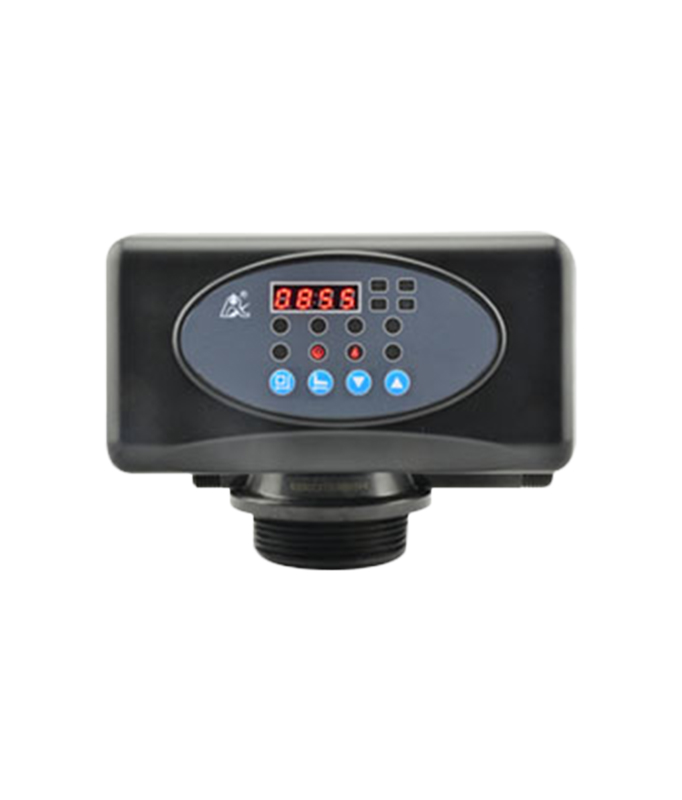
Runxin F71P1 Automatic Filter Valve 2.5″ Base
R1 863,00 Incl. VAT
The Runxin F71P1 is a timer-controlled automatic 2.5″ filter valve designed to manage service, backwash, and rinse cycles on water filtration systems. It is suitable for standard top-mount filter vessels and provides reliable automated operation without manual intervention.
Runxin F71P1 Automatic Filter Valve 2.5″ Base
The Runxin F71P1 is a time-clock controlled automatic filter valve designed for use on water filtration systems requiring scheduled backwash and rinse cycles. It replaces manual multiport or lever-type valves, allowing filter media to be cleaned automatically at pre-set intervals.
This valve is commonly used on sand, carbon, and other media filtration vessels where periodic backwashing is required to maintain performance. The control head is mounted directly onto a standard top-mount filter tank and manages the operating stages electronically.
The F71P1 uses a programmable controller to initiate backwash and rinse cycles based on time settings selected by the user. During normal operation, the valve remains in service mode and automatically transitions through the cleaning sequence without requiring manual adjustment.
Designed for residential and light commercial filtration systems, the Runxin F71P1 offers a compact and practical automation solution where flow requirements fall within the valve’s rated capacity.
✅ Technical Overview
- Control type: Time-based (timer controlled)
- Application: Automatic control of filter backwash and rinse cycles
- Valve mounting: Top-mount filter vessel
- Inlet / outlet size: ¾″ female connections
- Rated flow capacity: Up to 2.0 m³/h (manufacturer stated)
- Operating pressure range: 0.15 – 0.6 MPa
- Power supply: External DC power supply (12 V)
- Typical vessel compatibility: Standard small to medium filter tanks
- Valve body: Composite construction
- Operation: Service, backwash, rinse (automatic sequencing)
(All values based on published manufacturer information for the F71P1 model.)
Filter Tank Sizing Guide
| Tank Diameter | Typical Use |
| 6″ | Small residential filtration |
| 8″ | Standard household systems |
| 10″ | Higher flow residential or light commercial |
Backwash Timing Recommendations
| Application | Typical Interval |
| Household drinking water | 1–3 days |
| High sediment source | Daily |
| Light commercial | As needed per site water quality |
(You can adjust norms based on experience and data over time.)
| Weight | 3 kg |
|---|
Specifications
Specification |
Details |
| Model | Runxin F71P1 |
| Product Type | Automatic Filter Valve |
| Control Type | Timer-controlled automatic sequencing |
| Valve Mount Type | Top-mount filter vessel installation |
| Inlet Connection Size | ¾″ female |
| Outlet Connection Size | ¾″ female |
| Drain Port Size | ¾″ female |
| Rated Flow Capacity | 2.0 m³/h (2000 L/h) |
| Operating Pressure Range | 0.15 – 0.6 MPa (≈1.5 – 6 bar) |
| Power Requirement | External DC 12 V (with transformer) |
| Typical Filter Tank Compatibility | Standard top-mount vessels (6″–10″ diameter) |
| Controller Interface | LED display with status indicators |
| Programmable Functions | Adjustable backwash/rinse timing |
| Remote Signal Port | Yes — for external monitoring/automation |
| Pressure Relief Connector | Yes |
| Body Material | Corrosion-resistant composite |
| Typical Application | Glass & carbon media filtration systems, RO pre-treatment |
| Warranty | Manufacturer warranty (see product page) |
Pros & Cons
✔ Pros
- Automates filter backwash and rinse cycles
- Eliminates the need for manual valve operation
- Simple timer-based programming
- Compatible with standard top-mount filter vessels
- Compact design suitable for small installations
- Manufacturer-rated flow suitable for residential filtration systems
✖ Cons
- Time-based control only (no flow or demand sensing)
- Limited to lower flow applications
- Requires external power supply
- Not designed for water softener resin regeneration
FAQ's
1: What is the Runxin F71P1 used for?
The Runxin F71P1 is used to automatically control backwash and rinse cycles on water filtration systems such as sand or carbon filters.
2: Is the F71P1 suitable for water softeners?
No. The F71P1 is a filter valve, not a softener valve. Water softeners require regeneration-specific control valves.
3: How does the valve know when to backwash?
The valve operates on a timer-based system. Backwash and rinse cycles are triggered according to the schedule programmed into the controller.
4: What size filter tank can be used with this valve?
The valve is designed for standard top-mount filter vessels, typically used in residential filtration systems. Tank size must align with the valve’s flow rating.
5: Does the valve work without electricity?
No. The Runxin F71P1 requires an external DC power supply to operate the control head and automatic cycling.
6: Can the backwash frequency be adjusted?
Yes. The timer allows the user to set the backwash interval based on time (days or hours), depending on system requirements.
Related products